Table of Contents
-
The Significance of Norwegian Sea Urchins in the UAE's Culinary Scene
-
Evaluating Product Specifications: Grading and Quality for Live Sea Urchins
-
The Critical Logistics of Live Sea Urchin Transport: Norway to the UAE
The Significance of Norwegian Sea Urchins in the UAE's Culinary Scene
For discerning chefs and procurement managers in the United Arab Emirates, the quest for exceptional ingredients is constant. Among the world’s most prized marine delicacies is the live Norwegian sea urchin, a product that signifies ultimate freshness and a unique taste of the cold, pristine North Atlantic. Its delicate, briny roe, known globally by its Japanese name "uni," has become a hallmark of luxury dining, commanding a premium in the UAE's competitive hospitality and fine-dining sectors.
The market's demand is not just for sea urchins, but specifically for live specimens from trusted origins. A reliable supply of high-quality live sea urchins enables culinary professionals to offer an unparalleled sensory experience, one that cannot be replicated by processed or frozen alternatives. This guide provides a framework for sourcing this elite product, focusing on the logistical and regulatory intricacies of bringing live Norwegian sea urchins to the UAE market.
Why Origin Matters: The Norwegian Advantage
-
Pristine Cold-Water Environments: Norwegian sea urchins, primarily the Green Sea Urchin (Strongylocentrotus droebachiensis), are harvested from some of the cleanest and coldest waters on earth. This environment slows their metabolism, resulting in a sweeter, more complex flavor profile and firmer roe texture.
-
Sustainable Harvesting Practices: Norway's fisheries are governed by stringent regulations that ensure ecological balance. Sea urchins are often hand-harvested by divers, a selective method that minimizes environmental impact and ensures only mature, high-quality specimens are collected.
-
Reputation for Purity and Safety: Norwegian seafood exports are backed by a global reputation for safety and transparency. Rigorous monitoring by the Norwegian Food Safety Authority provides verifiable assurance of the product's quality from the point of harvest.
Culinary Applications for UAE Professional Kitchens
-
Unmatched Freshness in Raw Preparations: The primary application is serving the uni raw, moments after the urchin is opened. This is common in sushi, sashimi, and crudo, where the pure, unadulterated flavor is the main attraction.
-
Elevating Cooked Dishes: The rich, creamy uni can be gently incorporated into warm pasta dishes, risottos, or sauces, where it emulsifies to create a luxurious, umami-rich finish without overpowering other ingredients.
-
Flavor Profile: Live Norwegian uni offers a clean, sweet, and briny taste with a smooth, custard-like texture. This profile pairs exceptionally well with both subtle and bold flavors found in international and fusion cuisines popular across the UAE.
Evaluating Product Specifications: Grading and Quality for Live Sea Urchins
Unlike standardized fish fillets, sourcing live sea urchins requires a nuanced understanding of quality indicators that go far beyond simple weight or size. For a procurement manager, success depends on assessing the viability of the live animal and the potential quality of the roe within. The goal is to secure a consistent supply where each specimen delivers maximum yield and the desired sensory characteristics.
The evaluation process begins before the product even arrives, starting with clear specifications communicated to the supplier. Consistency in size, peak freshness, and high roe-to-shell ratio are the key metrics that impact both the final culinary product and the kitchen's bottom line.
Handling and Preparation in Professional Kitchens
-
Live Assessment upon Arrival: The first quality check is to confirm the urchins are alive. The spines should show slight movement, especially when touched. A lack of movement or a foul, ammonia-like odor indicates mortality and the product should be rejected.
-
- Opening and Extraction ("Cracking"): Chefs require specialized tools and techniques to carefully crack open the urchin's shell (or "test") without damaging the delicate roe lobes (gonads) inside. This is a skilled, labor-intensive process.
-
- Roe Yield and Quality: The uni is carefully spooned out and rinsed in saltwater to remove any shell fragments or impurities. The quality is judged by its color (ranging from bright yellow to deep orange), firmness, and completeness of the lobes.
Sourcing Live vs. Processed Uni
-
Live, Whole Sea Urchins: Sourcing live urchins offers the pinnacle of freshness and allows for "ocean-to-plate" marketing. However, it requires specialized storage (such as marine aquariums or dedicated chillers), skilled labor for processing, and managing unpredictable roe yields.
-
Fresh-Packed Uni Trays: Alternatively, businesses can source pre-processed uni, packed in trays. This option eliminates the need for in-house cracking and provides predictable portion sizes, saving time and labor. The trade-off is a slightly shorter shelf life and the loss of the "live product" appeal.
-
Inventory and Wastage: Live sea urchins are highly perishable and must be used within a few days of arrival. Procurement managers must plan for precise inventory management to minimize mortality and wastage, a critical factor in cost control.
The Critical Logistics of Live Sea Urchin Transport: Norway to the UAE
The journey of a live sea urchin from the Norwegian seabed to a Dubai kitchen is a race against time and a testament to modern cold chain logistics. Unlike frozen or fresh-chilled fish, a live animal's survival depends on maintaining a very specific environment. Any deviation in temperature, humidity, or handling protocol can lead to stress, mortality, and a complete loss of product value. This makes the logistics partner's role absolutely critical.
The entire supply chain must be optimized for speed and stability, using specialized packaging and constant monitoring to ensure the animals arrive healthy and in prime condition, ready for immediate use in the UAE's most demanding kitchens.
Mitigating Stress and Mortality in the UAE Climate
-
The "Cold and Wet" Chain: Live sea urchins must be kept in a consistently cool and moist environment, typically between 4°C and 8°C. They are packed in insulated, waterproof containers with damp materials and gel packs to maintain this climate without freezing them.
-
Exclusive Reliance on Air Freight: Due to their extreme perishability, live sea urchins are transported exclusively by air. This ensures the transit time from Norway to the UAE is minimized, usually within 24-48 hours from harvest.
-
Specialized Handling upon Arrival: The final leg of the journey is the most hazardous. Upon landing in the UAE, shipments must be cleared and transferred to refrigerated vehicles immediately to avoid thermal shock from the ambient heat. Any delay on the tarmac can be catastrophic.
-
Acclimatization and Holding: Once at the destination facility, urchins should be placed in professionally managed holding tanks or specialized refrigerators that maintain the correct temperature and humidity, allowing them to stabilize before being sent to clients.
Quality Control Points for Wholesale Buyers
-
Verifying Signs of Life: Upon receiving a shipment, the first step is a physical inspection. Check for responsive spines and tightly closed mouths (the "Aristotle's lantern"). Open or gaping mouths are a clear sign of stress or mortality.
-
Inspecting Shell Integrity: Examine the shells for cracks or damage sustained during transit. A compromised shell can lead to fluid loss and rapid deterioration of the animal.
-
Sensory Evaluation: A shipment of healthy, live sea urchins should smell clean and briny, like a fresh ocean breeze. Any off-putting or chemical odors are immediate red flags indicating a problem within the batch.
-
Documentation and Traceability: Ensure the shipment is accompanied by all necessary documentation, including health certificates and airway bills that allow for batch-level traceability back to the harvest location and date in Norway.
Wholesale Procurement Standards and UAE Compliance
Importing live marine animals for consumption into the UAE involves a stringent regulatory framework designed to protect public health and ensure food safety. For procurement managers, navigating these requirements is as important as managing the cold chain. Partnering with a supplier who has deep expertise in this area is non-negotiable, as errors in documentation or non-compliance can lead to costly delays, customs seizures, or outright rejection of shipments.
Compliance with standards set by bodies like the Ministry of Industry and Advanced Technology (MOIAT) and local food safety authorities is mandatory. A thorough understanding of these rules ensures a smooth and predictable supply chain.
Compliance Checklist for Procurement Managers
-
Verification of Health Certificates: Every shipment of live seafood must be accompanied by an official health certificate from the Norwegian Food Safety Authority. This document certifies that the products originate from monitored waters and are fit for human consumption.
-
MOIAT and Municipal Requirements: Ensure your supplier complies with all UAE-specific import regulations, including proper invoicing, certificates of origin, and adherence to labeling standards for wholesale distribution.
-
Navigating Food Import Systems: Familiarity with digital platforms like Dubai Municipality's "Zad" portal is essential for pre-approving and clearing food shipments efficiently. Your import partner should manage this process seamlessly.
-
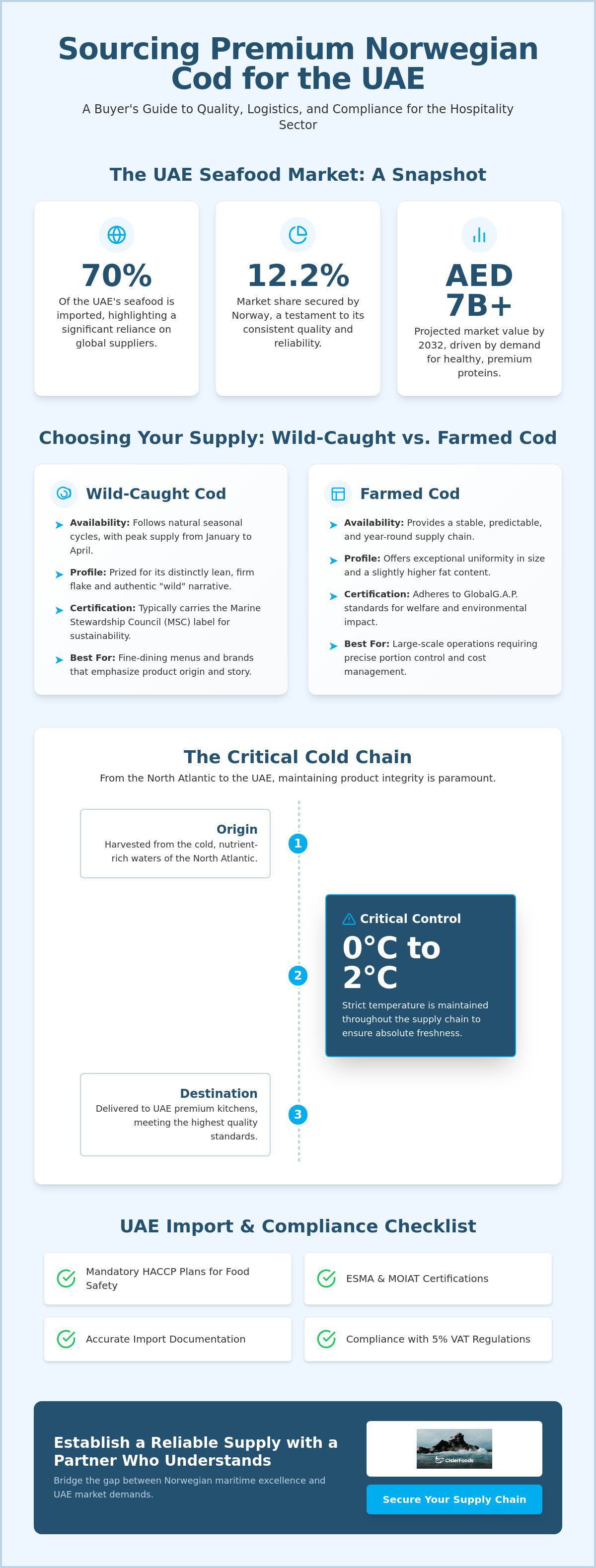
Supplier Certifications: Verify that your supplier operates under internationally recognized food safety standards, such as HACCP or ISO 22000. This provides an additional layer of assurance regarding their handling and storage protocols. The complex requirements for importing premium products are also detailed in guides for other seafood, such as this procurement guide for Norwegian salmon.
Contracting and Supply Stability
-
Managing Seasonal Availability: While available for much of the year, Norwegian sea urchins have peak seasons when the roe quality is at its best. Work with your supplier to understand this calendar and plan menus accordingly.
-
Lead Times and Order Cycles: Given the live nature of the product and its reliance on air freight, establish clear lead times for weekly or bi-weekly orders to ensure a consistent, fresh supply without overstocking.
-
Mitigating Logistics Risks: Discuss contingency plans with your supplier. How do they handle flight delays or customs issues? A reliable partner will have protocols in place to manage unforeseen disruptions and communicate proactively.
Establishing a Reliable Supply with CislerFoods
The complexities of sourcing and importing live Norwegian sea urchins to the UAE demand a specialized partner. CislerFoods operates as that essential bridge, connecting the pristine waters of Norway with the dynamic culinary landscape of the Middle East. We translate our deep understanding of Norwegian seafood and our mastery of regional logistics into a reliable, transparent, and high-quality supply chain for our clients.
Our operation is built on a foundation of operational excellence, ensuring that every shipment maintains its integrity from the moment it leaves the water until it arrives at your facility. We manage the intricacies of compliance, transport, and quality control so you can focus on creating exceptional dining experiences.
Why Partner with a Norwegian Seafood Specialist?
-
Deep Expertise in Live Shellfish: We possess specialized knowledge in the handling and transport of live, highly perishable products like sea urchins, a category that requires a higher level of care than standard fresh or frozen seafood.
-
Proven Cold Chain Integrity: Our logistics network is specifically designed to mitigate the thermal risks of the UAE climate, ensuring optimal conditions are maintained throughout the supply chain for maximum freshness and minimal mortality.
-
Full Regulatory Facilitation: CislerFoods handles all necessary regulatory and compliance paperwork, ensuring every shipment meets the stringent standards of UAE authorities for a smooth and efficient import process.
-
Direct Sourcing Relationships: We maintain direct relationships with trusted, sustainable harvesters in Norway, providing our clients with unparalleled access to the highest quality sea urchins available.
Next Steps for Bulk Procurement
To secure a consistent supply of premium, live Norwegian sea urchins for your business, we invite you to connect with our procurement specialists. We provide tailored solutions for the hospitality, catering, and premium retail sectors, designed to meet your specific volume and quality requirements.
-
Request our seasonal availability calendar and detailed product specifications.
-
Schedule a consultation to discuss your high-volume supply needs and logistical arrangements.
-
Contact CislerFoods for professional Norwegian sea urchin wholesale solutions.
Frequently Asked Questions (FAQs)
**What is the holding life of live Norwegian sea urchins in the UAE?
** When stored correctly in a controlled environment (4-8°C, high humidity, or a marine tank), live sea urchins can be held for 2-4 days after arrival. However, for the best quality uni, it is recommended to use them within 48 hours.
**How is the quality of Norwegian sea urchin roe (uni) graded?
** Uni is typically graded based on color, texture, and size. Grade A (or "Gold") uni has a bright, vibrant yellow or orange color, a firm yet creamy texture, and large, intact lobes. Lower grades may have a duller color or softer texture.
**What are the main UAE regulatory requirements for wholesale seafood?
** The primary requirements include a health certificate from the country of origin, a certificate of origin, proper labeling in accordance with UAE standards, and compliance with all import procedures managed by bodies like MOIAT and local municipalities.
**Can I specify a size grade for live sea urchins in my bulk order?
** Yes, reputable suppliers like CislerFoods can typically source sea urchins based on size grades (e.g., small, medium, large). This allows for better portion control and consistency in presentation. Discussing your specific needs with your supplier is key.
**How are live sea urchins kept alive during transit from Norway?
** They are transported via air freight in specialized, insulated containers that maintain a cool, damp environment. They are not submerged in water, but are packed with materials like damp seaweed or cloth and cool packs to prevent stress and mortality.
**What is the peak season for Norwegian sea urchins?
** The peak season for Norwegian sea urchins, when their roe is most developed and of the highest quality, is typically during the colder months, from late autumn through winter and into early spring.
**What's the difference between buying live urchins and pre-packaged uni trays?
** Live urchins offer the absolute peak of freshness and a unique selling point for restaurants, but require skilled labor to process. Pre-packaged uni trays offer convenience, consistent portioning, and reduced labor costs, but have a slightly shorter shelf life once opened.
**How do I verify the authenticity of Norwegian-origin seafood?
** Authenticity can be verified through official documentation, including the Certificate of Origin and the Health Certificate issued by the Norwegian Food Safety Authority. A transparent supplier will provide full traceability for their products.